
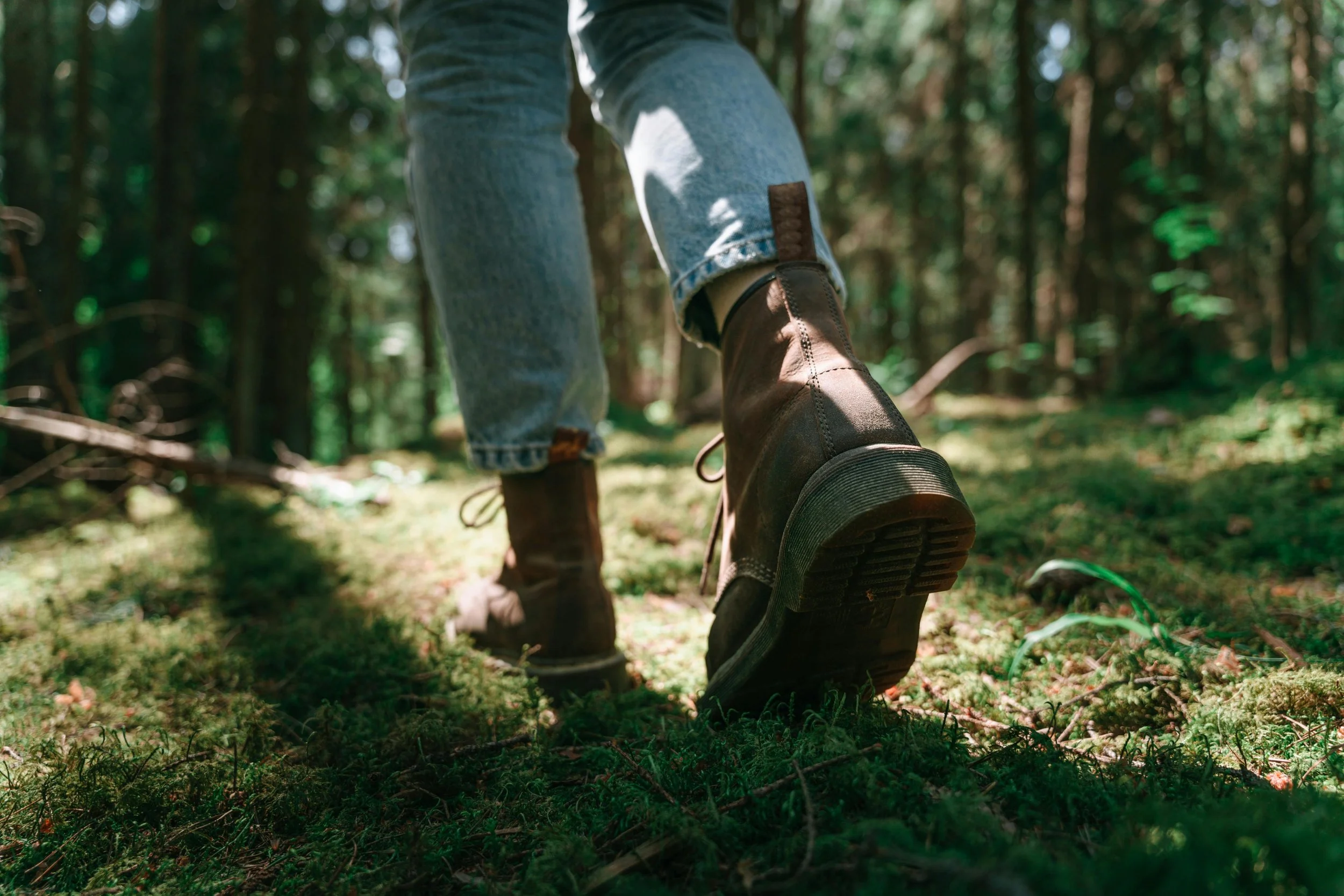
by Kathleen McIntyre, LCSWA
I first experienced forest bathing long before I knew the term existed. As a young researcher in the Panamanian rainforest, I was so focused on collecting data that I missed the rainforest herself. Locals spoke of tapirs, anteaters, and coatis, but my hurried pace left me blind.
Then a Panamanian elder guided me. He slowed me down, teaching me to walk softly, to listen, to watch with curiosity. For hours, we barely spoke. Yet in that silence, the rainforest revealed herself: hidden animals, subtle sounds, vibrant patterns I had rushed past before.
The greatest shift wasn’t in what I saw, but in how I felt. Calmness seeped into my nervous system, lingering for days. That was my initiation into forest bathing: slowing down, opening the senses, and receiving the forest as a teacher.
When you step into a forest with this kind of presence, you begin to notice the subtle details: the intricate pattern of lichen on a rock, the sound of wind in the branches, the coolness of the air across your skin. Each is an invitation into deeper connection, reminding you that you are not separate from nature—you are part of nature.
So what exactly is forest bathing?
Unlike a hike, forest bathing has no destination. It’s not about how far you go, but how deeply you arrive in the present moment. A guided practice usually lasts two or more hours, with slow movement, pauses for observation, and opportunities to engage all the senses. It is intentionally slow and immersive, designed to bring you into deep relationship with the forest. Over time, regular shinrin-yoku experiences provide profound support for stress reduction, nervous system regulation, emotional healing, and overall well-being.
But nature connection doesn’t always require hours. It can also be found in a brief, intentional pause—five minutes of noticing the sky outside your window, sipping your morning coffee outdoors, or resting your hand on the bark of a tree. These smaller moments may seem simple, yet they create powerful resets for the body and mind when woven into daily life.
Both forms of practice—the spaciousness of guided forest bathing and the shorter pauses of everyday nature connection—work together to restore balance and cultivate resilience. One offers depth, the other consistency, and both are deeply supportive when integrated into a lifestyle.
Here are a few ways to begin exploring both:
Schedule a two-hour forest bathing experience with a certified forest therapy guide. Move slowly, with no destination, and allow yourself to be guided.
Pause for daily nature connection. Take your tea outside, notice birdsong, or walk barefoot on the grass.
Engage your senses. Whether for hours or moments, tune into what you see, hear, smell, feel, and taste.
Practice gratitude. End with a quiet thank you to the land that has held you.
As you cultivate this relationship, you may feel called to go deeper. At Heartwood School of Forest Therapy, we support individuals in strengthening their personal practice and also train those who wish to become certified forest therapy guides and guide others into the healing experience of forest bathing. Wherever you begin—whether with a two-hour immersion or a mindful pause at your doorstep—you are stepping into a practice that can transform your health, your spirit, and your connection to the living world.