
by Julie Sczerbinski
Many people searching for how to become a forest therapy guide aren’t simply looking for a new skill. Often, they are responding to a deeper call, a desire to help restore connection in a time when both the Earth and our nervous systems are under strain.
A forest therapy guide is a trained facilitator who leads guided nature-immersion experiences that help people slow down, engage their senses, and reconnect with the natural world. Most guides complete a forest therapy guide certification program that teaches mindfulness and somatic-based practices, trauma-aware facilitation, and safe group leadership in outdoor settings.
This path tends to draw those who feel a pull toward the natural world and have a desire to support healing by creating spaces where people can remember their belonging with the Earth. If you are wondering how to become a forest therapy guide, this guide will help you understand the training, forest therapy guide certification, and next steps.
What Is Forest Therapy?
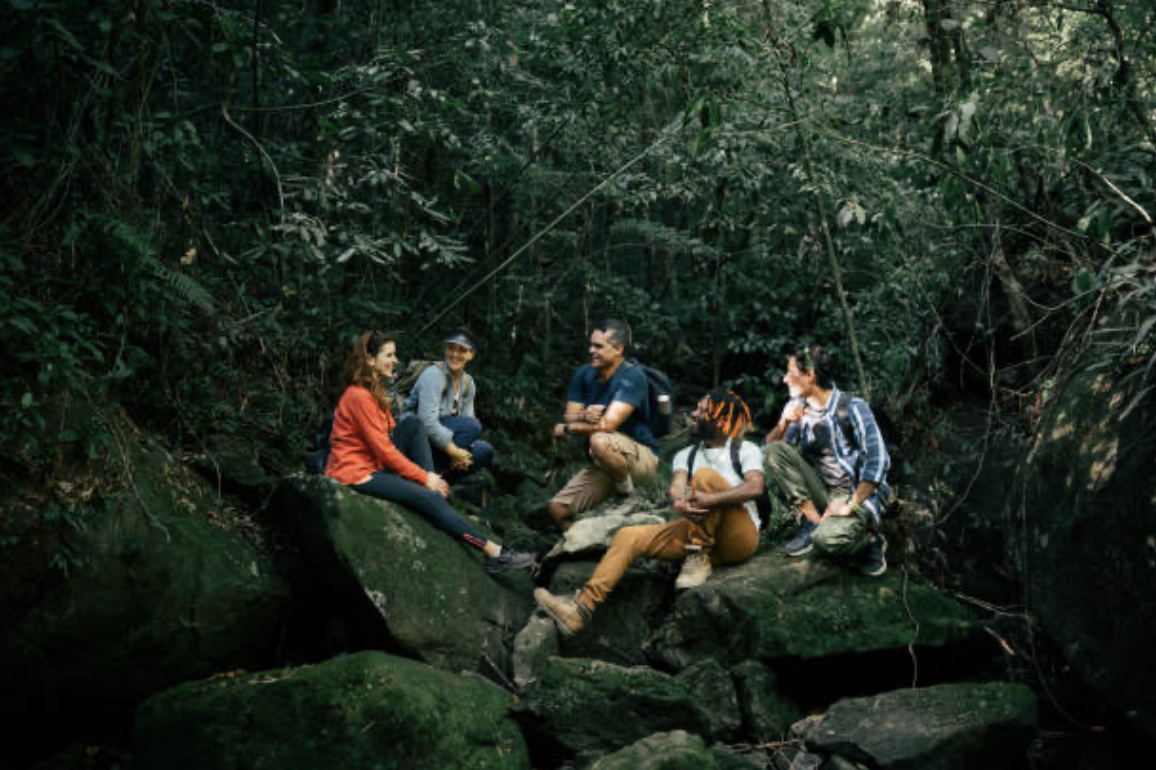
Forest therapy is a guided, relational practice sometimes described as forest bathing. It invites people to slow down and engage their senses in Nature from an embodied, mindful presence. It is grounded in mindfulness, somatic awareness, and evidence-informed approaches to well-being.
Inspired by the Japanese tradition of shinrin-yoku (“taking in the atmosphere of the forest”), forest therapy walks have been associated with reduced stress, improved mood, enhanced immune function, and an overall sense of connection and well-being. While individuals can practice forest bathing on their own, forest therapy is usually offered as a guided experience led by a trained forest therapy guide.
What Is a Forest Therapy Guide?
A forest therapy guide is someone who facilitates mindful, embodied, sensory-based experiences in Nature that support mental, emotional, physical, and spiritual well-being.
Forest therapy guide training includes learning how to create experiences that are welcoming and supportive for a wide range of participants, including attention to group dynamics, nervous system awareness, trauma-informed facilitation, and ethical, safe guiding in outdoor settings. The role of the guide is not to interpret Nature or act as an expert, but to create conditions where people can rediscover their own direct relationship with the land.
Do You Need A Certification to Become a Forest Therapy Guide?
In most places, certification is not legally required to guide forest therapy walks, but professional training is strongly recommended. Local regulations and land-use requirements may still apply, especially when working with organizations or on public lands.
Forest therapy is more than “a walk in the woods.” Skilled forest therapy guides are trained in practices that support safety, presence, and meaningful connection. A reputable forest therapy guide training program teaches how to guide experiences grounded in mindfulness and somatic awareness while also attending to trauma, accessibility, and group care.
Certification also carries professional value for those exploring how to become a forest therapy guide professionally. More organizations, retreat centers, healthcare providers, schools, and wellness programs are seeking trained forest therapy guides when forming partnerships or hiring facilitators. Completing a comprehensive forest therapy certification signals credibility, preparation, and a commitment to ethical practice.
Steps for How to Become a Forest Therapy Guide
If you’re wondering how to become a forest therapy guide, most people move through three key stages: personal practice, formal training, and mentored experience.
1. Begin with Personal Practice
Before guiding others, it is important to cultivate your own relationship with Nature. Spend intentional time outdoors with curiosity and presence so you can experience forest bathing from the inside out. Your own experiences of connection become the roots of your guiding.
2. Choose a Forest Therapy Guide Training Program with Depth
A strong forest therapy certification program is experiential, not only theoretical. Look for training that offers a comprehensive curriculum rooted in mindfulness and somatic awareness, mentorship from experienced guides, clear training in ethics, safety, and trauma-informed facilitation, and opportunities to guide with real participants in Nature.
The quality of your training deeply shapes the quality of your guiding.
3. Learn Through Experience and Mentorship
Forest therapy is learned through experience. Practicum opportunities, mentorship, and practice guiding are essential for developing skill and confidence. Over time, you learn how to hold space for groups, respond to what arises in the moment, and guide with authenticity and care.
How Forest Therapy Guides Use Their Training
For many people, forest therapy becomes a meaningful addition to work they are already doing. Therapists, educators, coaches, retreat leaders, and wellness practitioners often weave forest therapy into their existing offerings.
Others feel called to offer forest therapy as a primary focus, creating programs that support healing and connection for people and for the natural world.
Who Is Forest Therapy Guide Training For?
Forest therapy guide training draws people from many different backgrounds. Many are seeking a way of living and working that feels more aligned with their values and their care for well-being, community, and the Earth.
You do not need to be a therapist, coach, or outdoor professional to begin. What matters most is a willingness to slow down, listen deeply, and cultivate respectful relationships with both people and place.
Frequently Asked Questions About Becoming a Forest Therapy Guide
Do you need to be a therapist to become a forest therapy guide?
No. Many forest therapy guides come from backgrounds in therapy, coaching, education, or wellness, but it is not required. What matters most is your willingness to cultivate presence, listen deeply, and guide others with care and respect.
How long does forest therapy training take?
Training programs vary. Many forest therapy certification programs unfold over three to six months and include online learning, personal practice, mentorship, and practicum experiences.
How much does forest therapy guide training cost?
The cost of forest therapy guide training varies depending on the school, format, and length of the program. Tuition typically ranges from several hundred dollars to a few thousand for comprehensive certification programs that include guided practice and instructor support.
Do I have to travel to attend forest therapy guide training, or are there online options?
There are a variety of options when it comes to forest therapy guide training. Some schools offer in-person immersive training retreats that require travel to attend. Other training programs are offered entirely online, allowing you to participate from home while practicing in your own local landscape.
Some schools take a hybrid approach, requiring online classes followed by in-person training. Because different schools structure their programs in different ways, it’s helpful to explore the format that best fits your schedule, learning style, and ability to travel.
Can forest therapy be part of an existing career?
Yes. Many guides integrate forest therapy into work they are already doing. Therapists, educators, retreat leaders, and wellness practitioners often weave forest therapy into their offerings as a complementary, Nature-based practice.
Is forest therapy the same as forest bathing?
Forest bathing and forest therapy are closely related but not identical. Forest bathing generally refers to a personal practice of slow, mindful immersion in Nature, engaging the senses to support relaxation and overall well-being. Forest therapy usually refers to structured, guided experiences, often led by trained forest therapy guides, that use similar sensory and relational practices to support deeper connection with the more-than-human world and to promote specific aspects of health and well-being.
Taking the Next Step
If you feel drawn to becoming a forest therapy guide, the next step is to explore forest therapy guide training programs that align with your values and the depth of practice you are seeking.
If you’d like to learn more about how to become a forest therapy guide, you’re warmly invited to explore the Forest Therapy Guide Certification program at Heartwood School of Forest Therapy. Our training is offered in two formats: a fully online program you can complete from your home landscape, or an in-person training retreat for those who prefer an immersive, on-site experience.
Becoming a forest therapy guide is not only about learning how to lead others in the woods. It is about deepening your own relationship with the natural world and learning how to create the conditions for meaningful connection to unfold.
If this path speaks to you, it may be worth taking a closer look at where it could lead.